
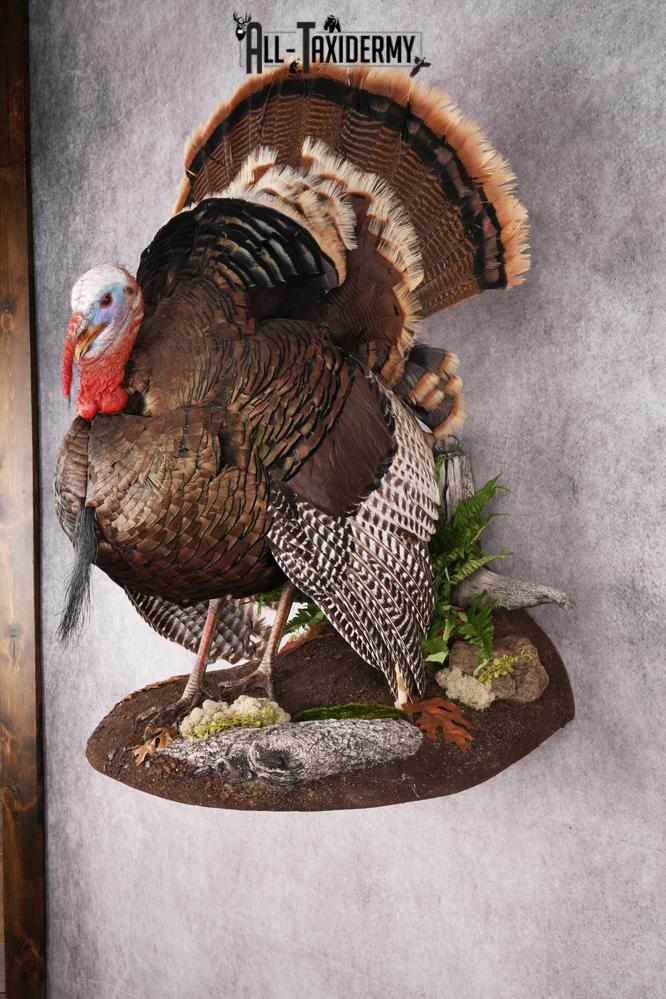
Description
Turkey Mounts
Turkey mounts can be a stunning addition to any collection, showcasing the beauty and grandeur of these impressive birds. Here’s a comprehensive guide for customers interested in turkey mount taxidermy:
Turkey Mounts Taxidermy: A Comprehensive Guide
1. Types of Turkey Mounts
a. Full Body Mounts
- Description: A complete representation of the turkey, including its body and legs.
- Best For: Displaying the turkey in a lifelike, natural pose, often used for showcasing unique postures or behaviors.
b. Shoulder Mounts
- Description: Features the turkey’s head, neck, and part of its chest.
- Best For: More compact displays, suitable for smaller spaces while still highlighting the bird’s distinctive features.
c. Fan Mounts
- Description: Showcases the tail feathers (fan) in a decorative display.
- Best For: Emphasizing the turkey’s impressive plumage, often paired with the bird’s beard and spurs.
d. Flying Mounts
- Description: Captures the turkey in a dynamic flying pose.
- Best For: A dramatic, eye-catching display that demonstrates the bird’s grace and power in flight.
2. Choosing the Right Mount
a. Consider the Space
- Determine the amount of space available for the mount. Full body mounts require more room, while shoulder or fan mounts are better for limited spaces.
b. Highlighting Unique Features
- If the turkey has particularly striking plumage or a unique pose, consider a mount that showcases these attributes prominently.
c. Personal Preferences
- Decide whether you prefer a more naturalistic approach or a stylized display. Customization options can often be tailored to your specific tastes.
3. The Mounting Process
a. Preparation
- Ensure the turkey is properly prepared and preserved. This involves skinning, fleshing, and treating the specimen to prevent deterioration.
b. Mounting
- A skilled taxidermist will use a combination of traditional and modern techniques to create a realistic mount. This includes sculpting a form, attaching the skin, and meticulously painting details.
c. Final Touches
- Additional touches like adding artificial vegetation or enhancing the mount with a custom base can further enhance the overall presentation.
4. Maintenance and Care
a. Cleaning
- Dust the mount regularly using a soft brush or cloth. Avoid using water or cleaning solutions that could damage the specimen.
b. Display Environment
- Keep the mount away from direct sunlight, excessive moisture, and extreme temperatures to preserve its appearance and longevity.
c. Professional Cleaning
- For thorough cleaning or repairs, consult a professional taxidermist to ensure the mount is properly cared for.
5. Choosing a Taxidermist
a. Experience and Reputation
- Select a taxidermist with experience in mounting turkeys. Look for reviews and examples of their previous work to ensure high-quality results.
b. Customization Options
- Discuss your vision with the taxidermist and inquire about customization options to achieve the exact look you want.
c. Cost and Timeline
- Understand the cost involved and the estimated time for completion. Quality taxidermy can be a significant investment, but it ensures a beautiful and lasting display.
6. Legal Considerations
- Ensure you are aware of and comply with local regulations regarding the possession and display of taxidermied animals. This may include permits or restrictions.
Turkey mounts are not only a testament to the skill of the taxidermist but also a lasting tribute to the beauty of wildlife. Whether for personal display or as part of a collection, a well-crafted turkey mount can be a striking centerpiece.
Buy Turkey Mounts Online.


Reviews
There are no reviews yet.